About Re:Wear Hudson Valley
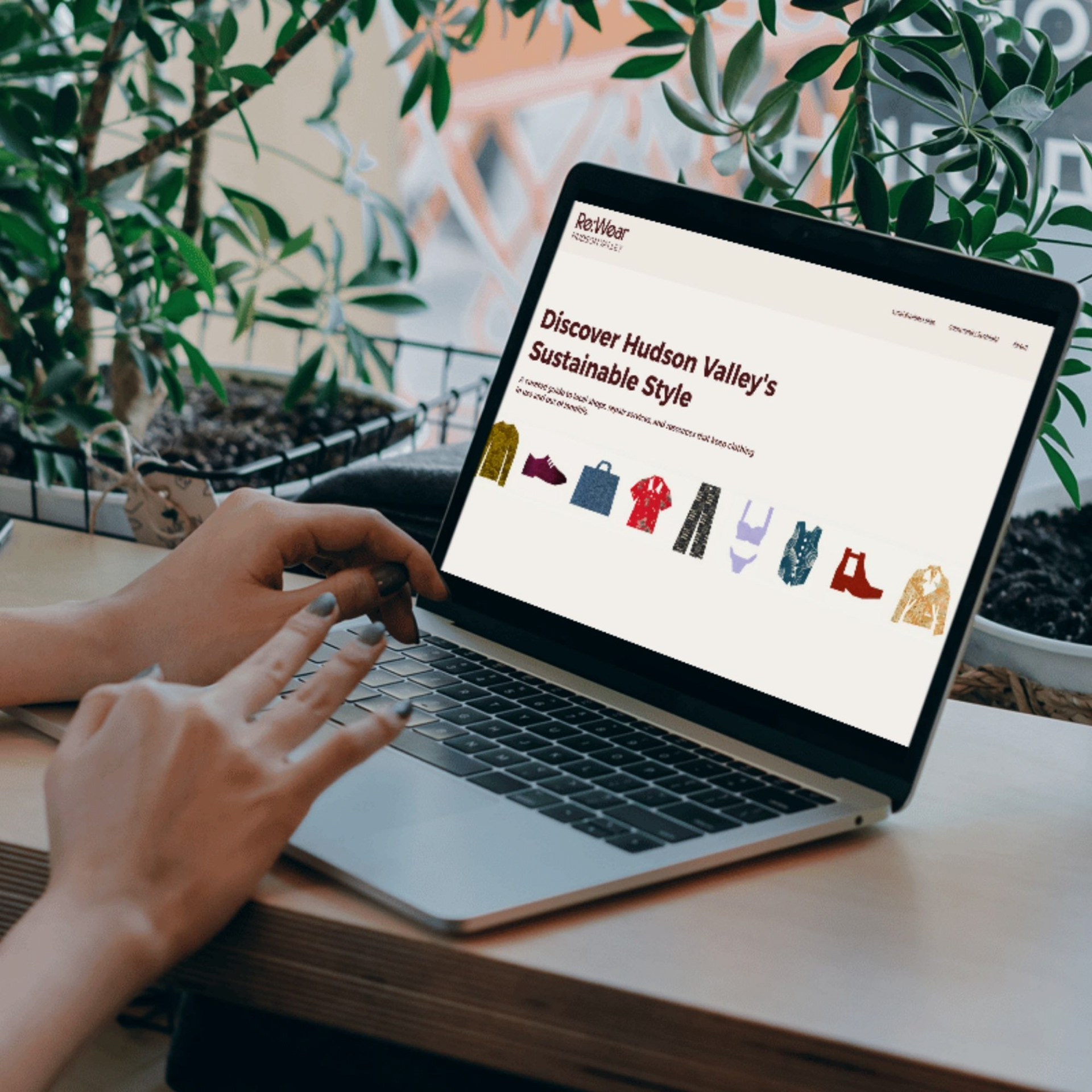
The fashion industry is one of the most harmful industries on the planet, but making a difference doesn't have to be complicated. Re:Wear Hudson Valley is a website built to make sustainable fashion easy to find, explore, and enjoy right here in the Hudson Valley.
The site features an interactive map where you can discover vintage shops, thrift stores, fabric stores, upcycling studios, repair shops, and locally-made sustainable brands all in your own backyard. Finding a better way to shop has never been more straightforward.
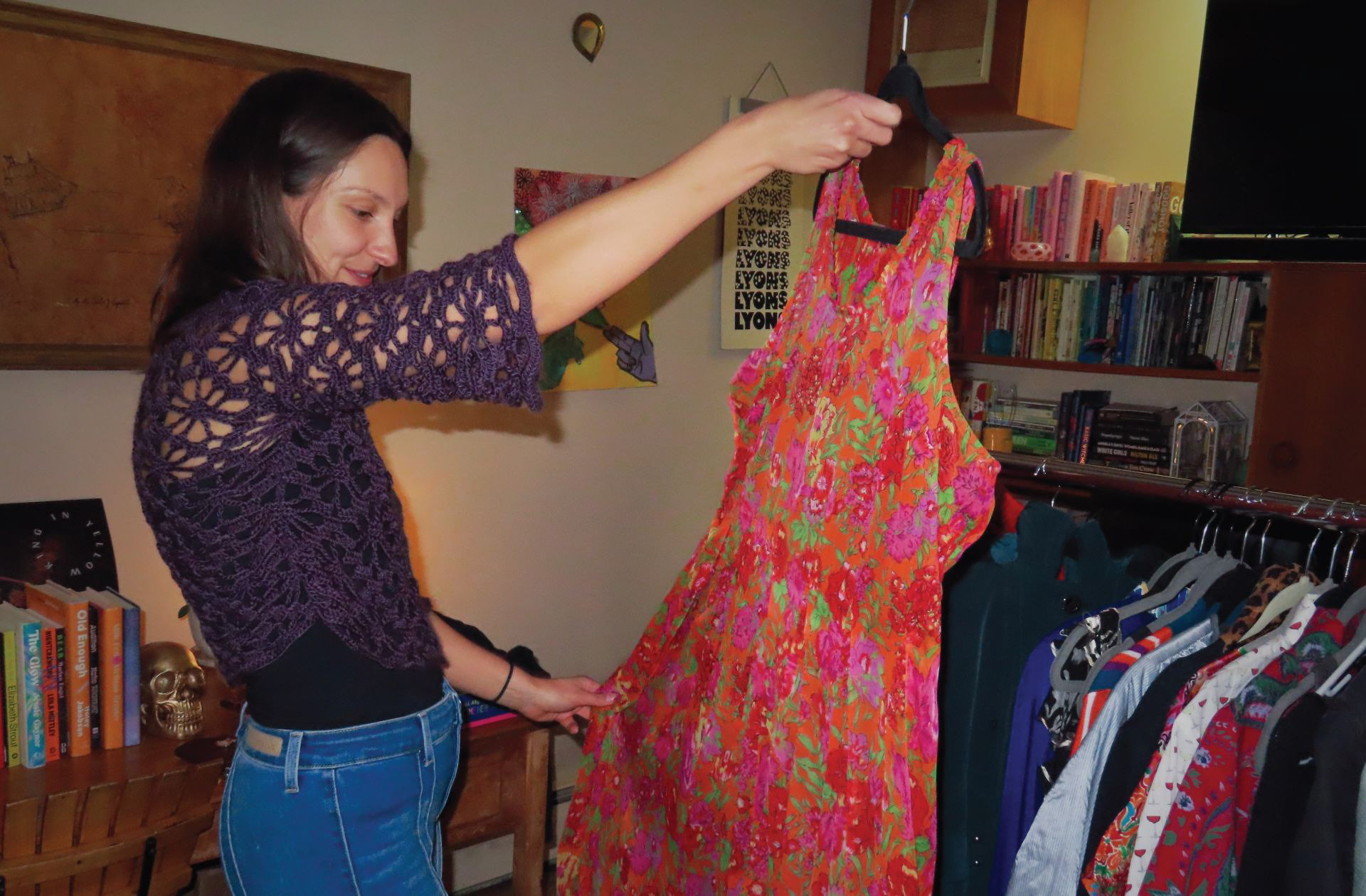
The Community Spotlight page highlights the people and businesses bringing the community together through events, workshops, and creative initiatives. Sustainable fashion isn't just about what you wear. It's about who you meet and what you build together.
At its heart, Re:Wear Hudson Valley believes that clothing should connect us. When we shop with intention and support local businesses, we push back against the harmful cycles of fast fashion that affect workers, our health, and our environment. The resources are already here. The community is already here. Re:Wear Hudson Valley simply brings it all together and makes it fun to explore.
User Needs
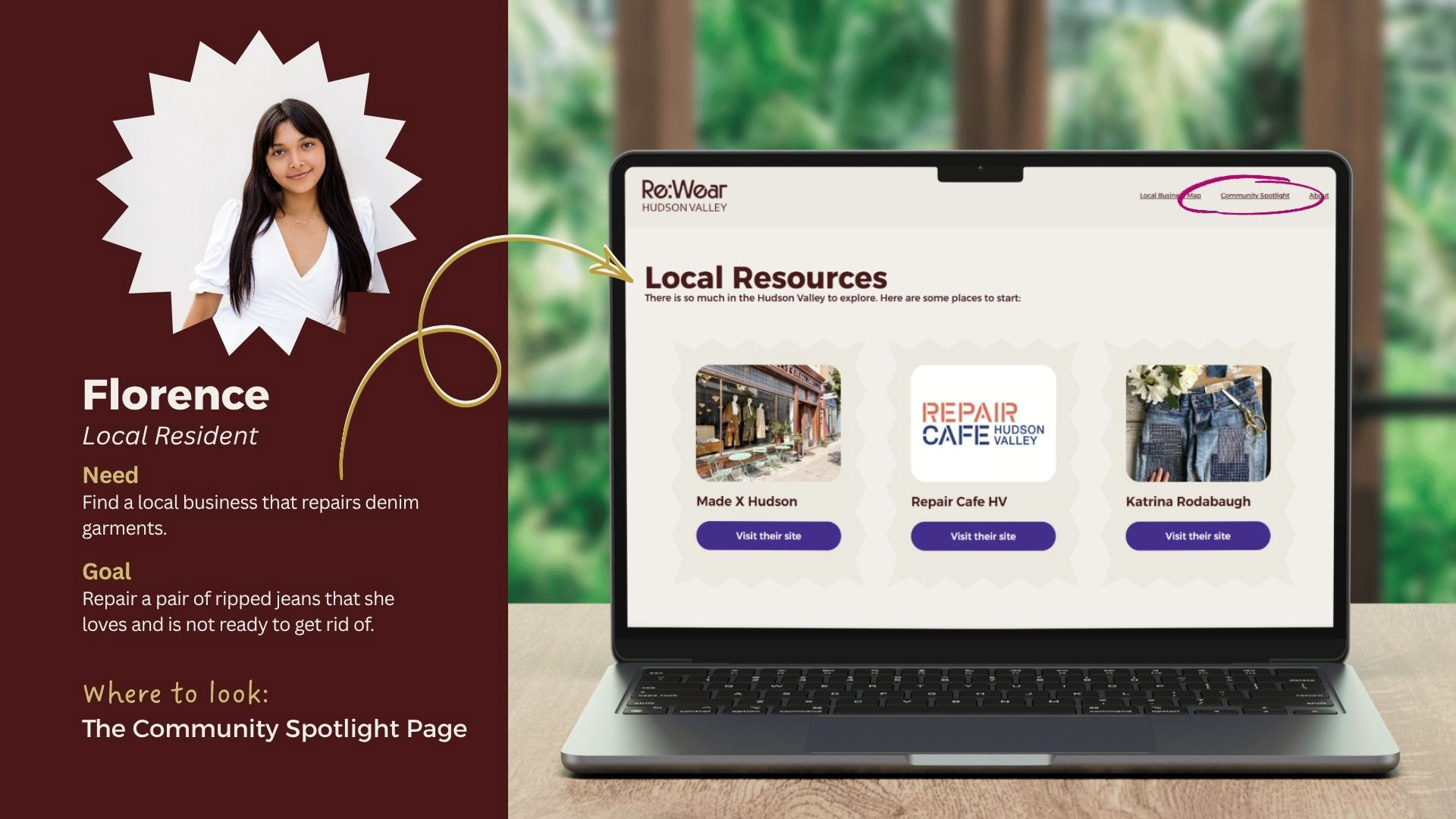
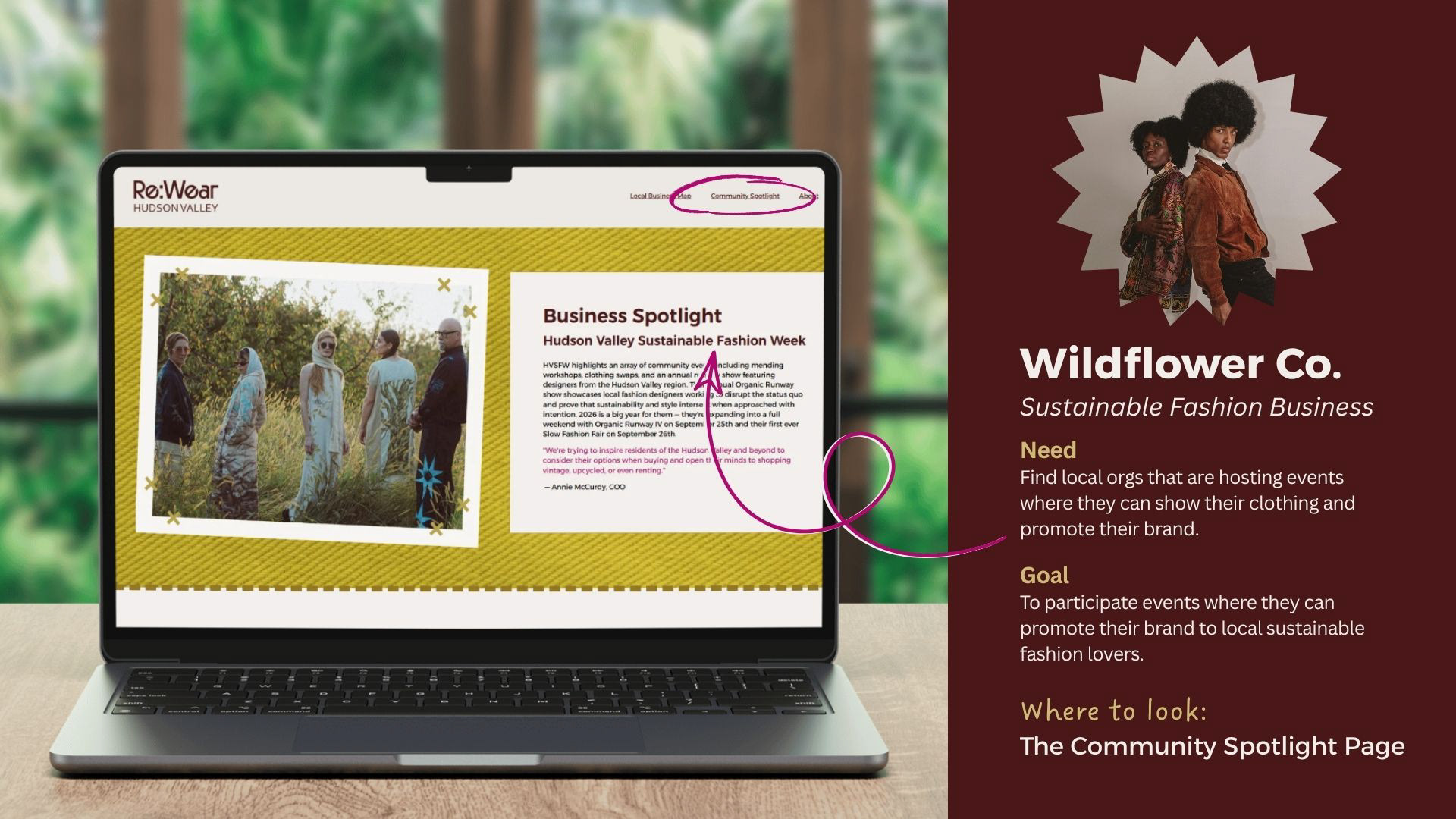
Understanding user needs is the number one priority to a project like this. Is is crucial to put yourself in the shoes of the user and understand what information they are looking for and how to make it as simple as possible to find it. When creating the interface, I used three user stories to guide me. The main audiences are people looking for organizations and businesses that provide services or events/workshops and people who are looking to find nearby locations of sustainable fashion businesses. This boils down to two main pages to assist the user: the Community Spotlight page and the Local Business Map page.
The Community Spotlight page highlights businesses that are hosting community events/services whether that be sewing classes, fashion shows, or repairing items. If you are a resident, you may be looking to see if any businesses host flea markets to shop, if you are a business, you may do the same to see if you can sell your products.
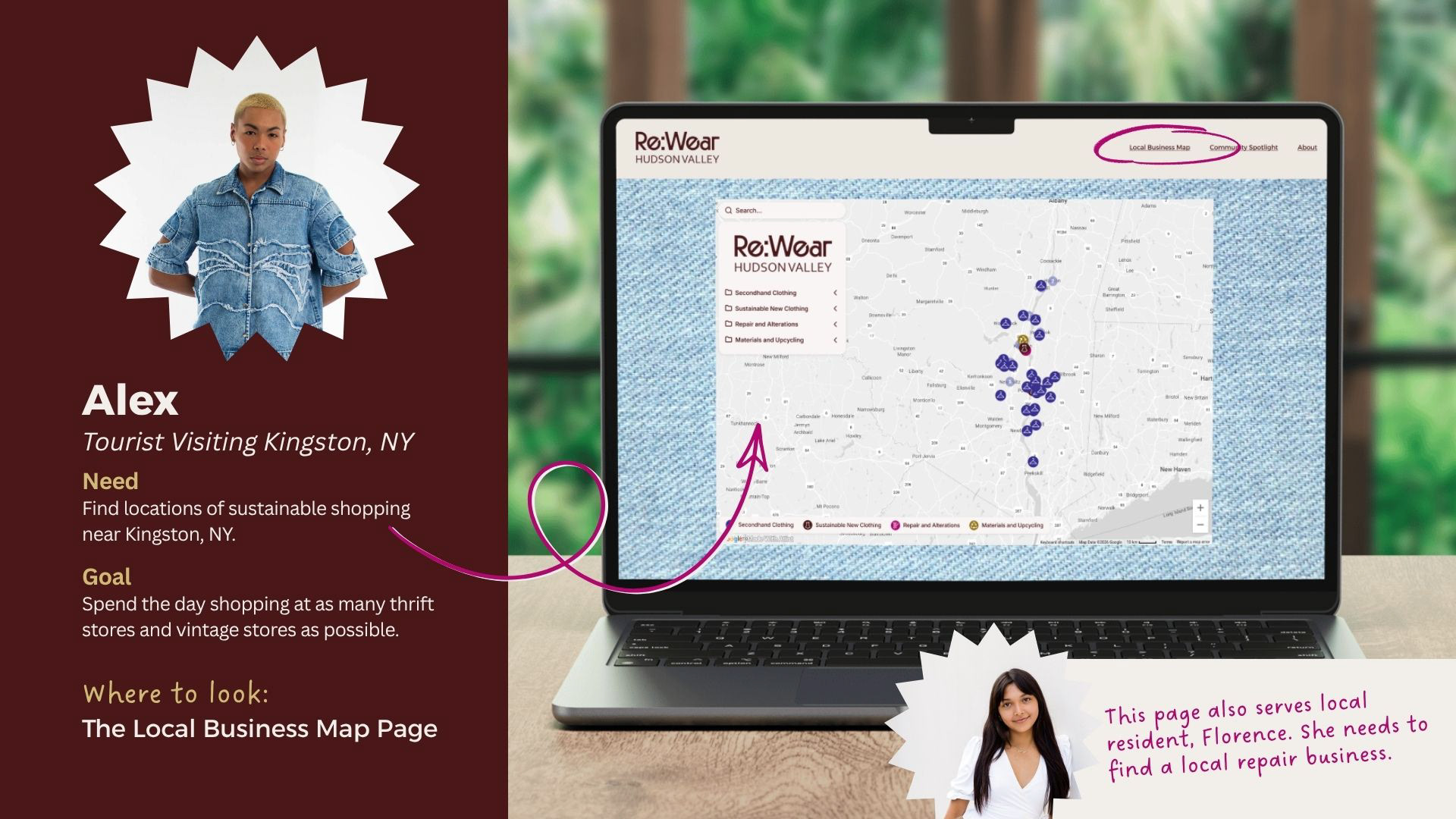
The Local Business Map page is useful if you are looking for locations of businesses. You may want to see how far you are from the fabric thrift store, or you have heard Kingston has good vintage, but you want to see how many spots there are and how close they are to each other.
Local Business Map
The Local Business Map is a map of the Hudson Valley's secondhand and sustainable businesses. This serves as a resource for the community to find nearby businesses to repair items, shop, upcycle, buy materials, etc.
This map was built using a platform called Atlist, a spreadsheet of gathered locations from research and customized to fit the branding of Re:Wear HV.

Visual Identity
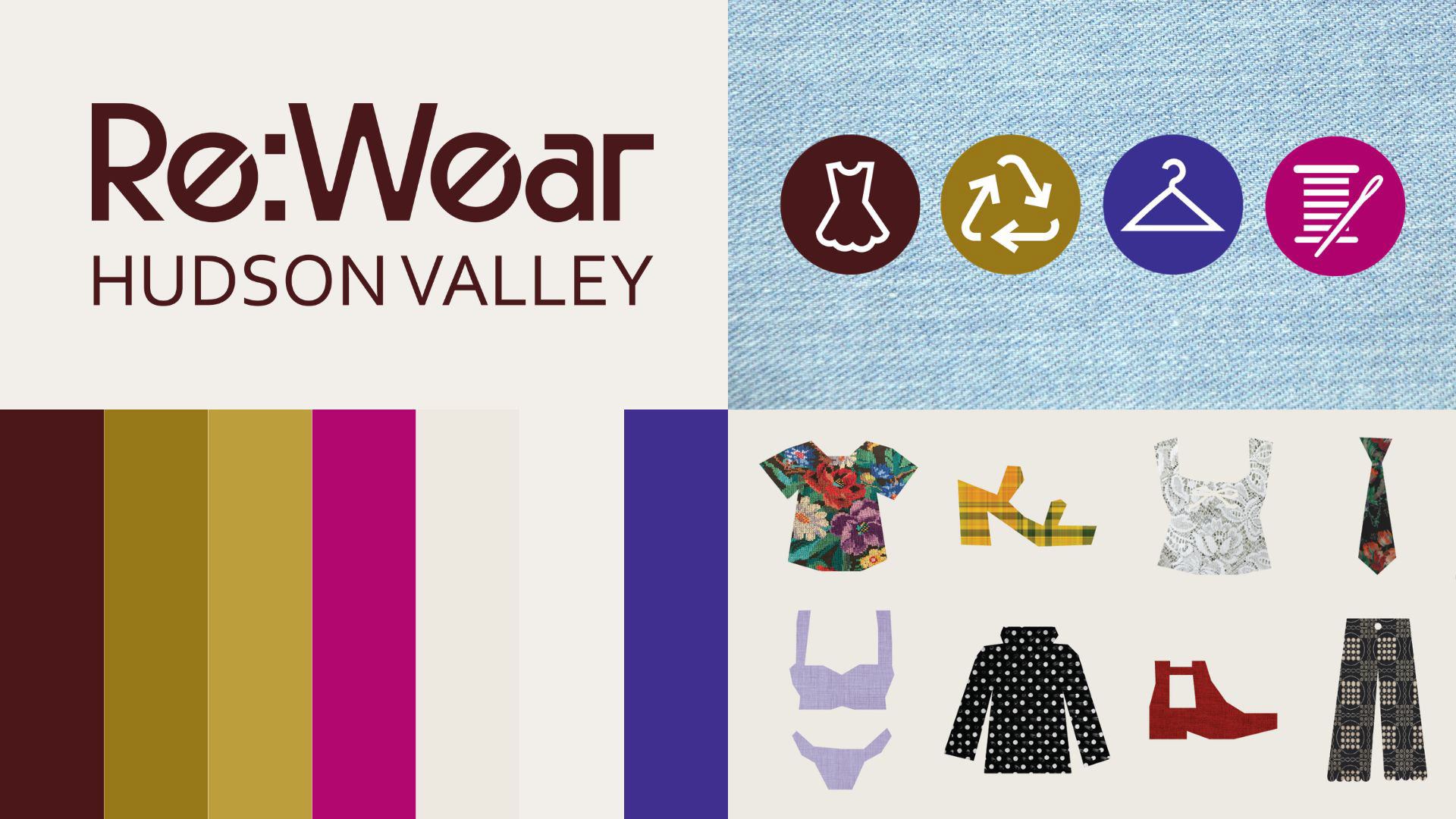
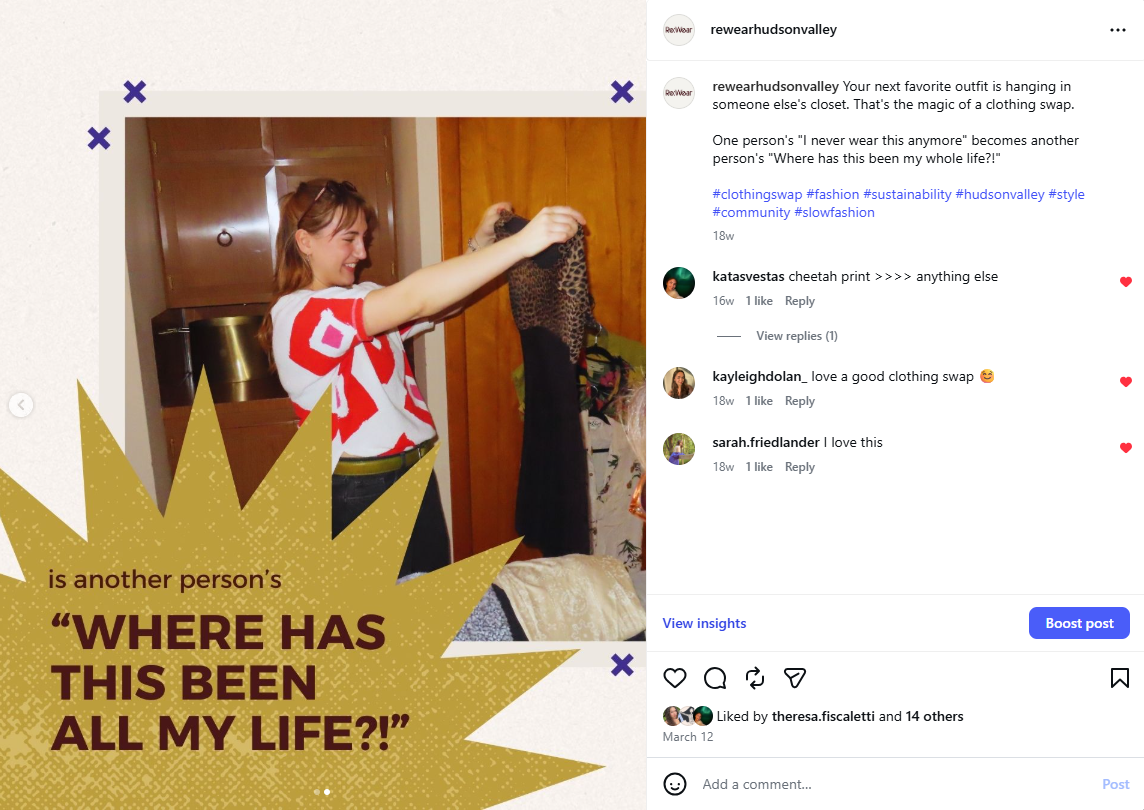
The visual identity takes on a modern and playful feel reflecting the celebration and innovation of sustainable fashion. The typography I chose, Riant Display, brings a modern and unique touch which the colors are bold and eye-catching. The beige and brown are the main colors and are used to ground the brand, they are used interchangeably between text color and background color. They are used to display all textual information. The yellows, blue and pink are used as accent colors. Blue is used for buttons and links. The yellow and pink are used as decorative accents and to emphasize text.
The graphic elements use fabric textures and rough edges. This creates a handmade, one-of-a-kind feel that mimics the experience of sustainable fashion. The branding is supposed to feel crafty and handmade, keeping the user, the creator, and the goal all together in one place.

Accessible Brand Guide
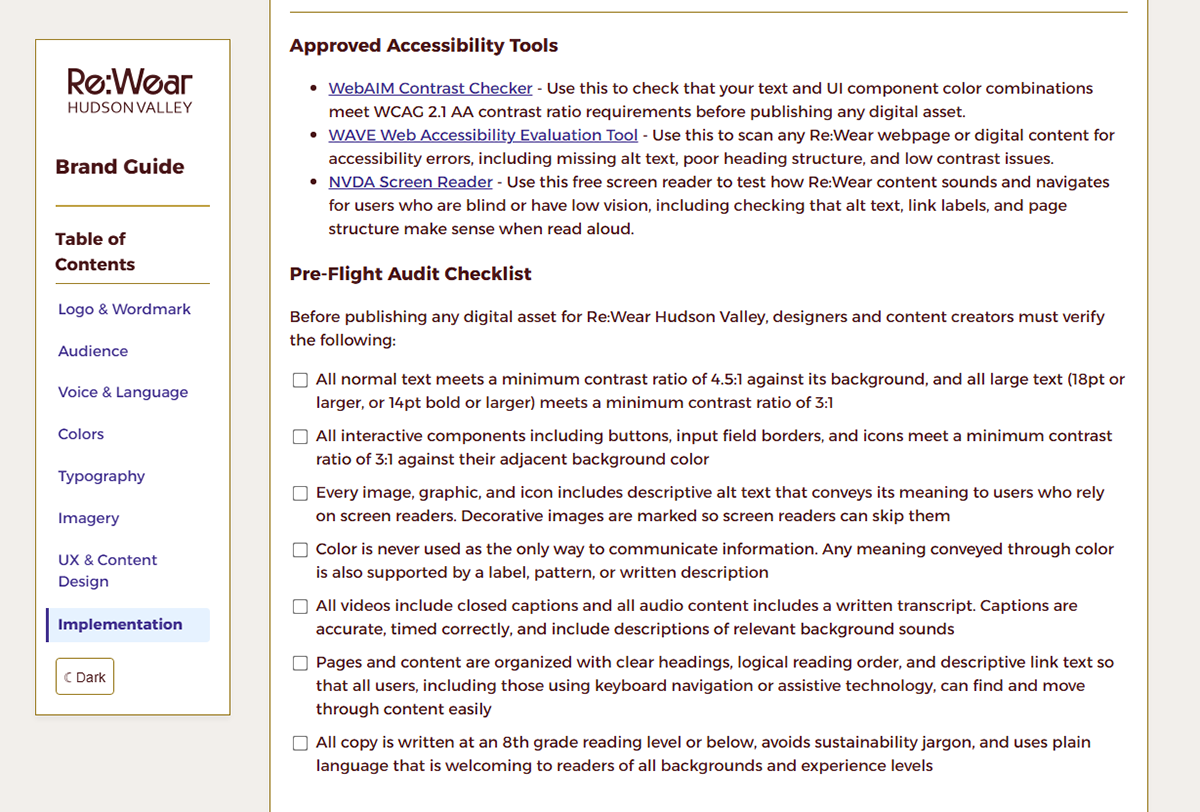
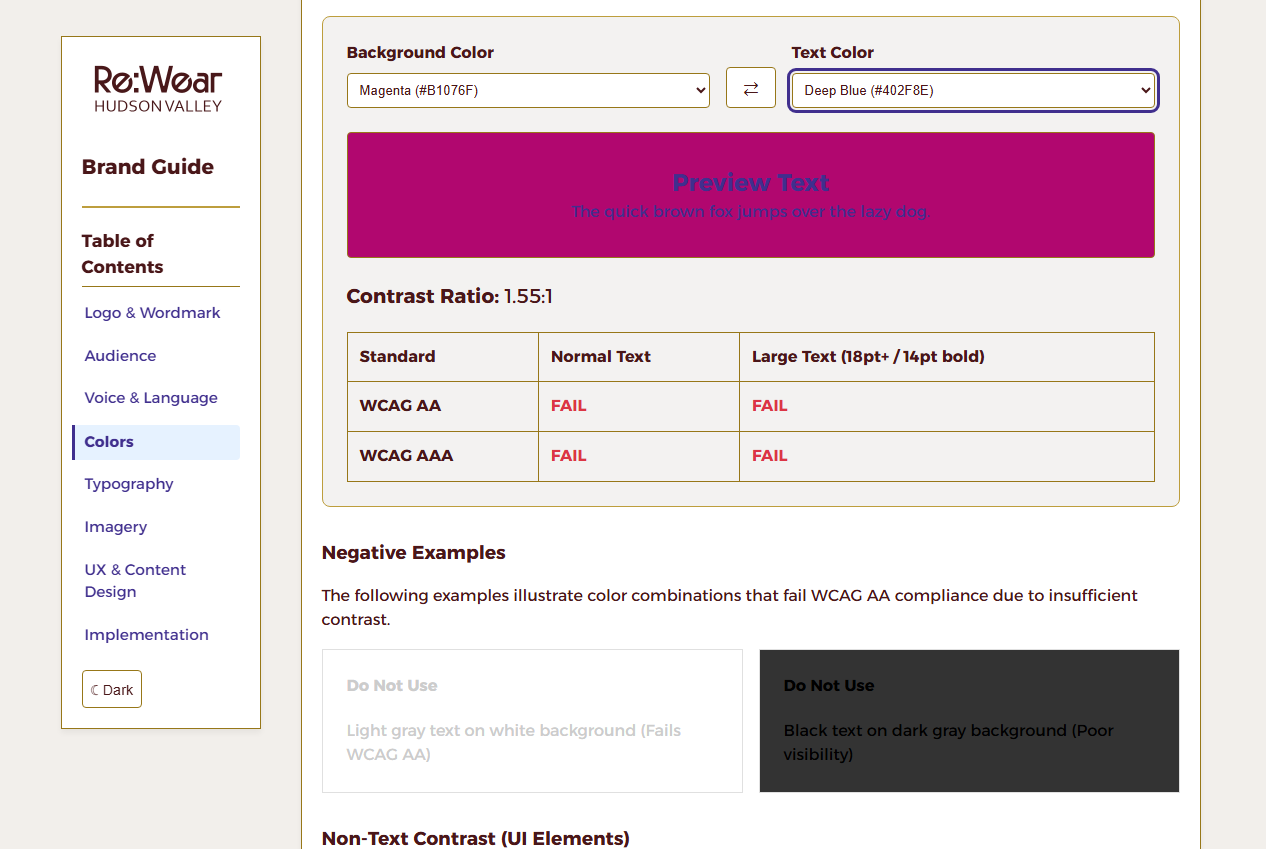
The Re:Wear Hudson Valley Brand Guide is an interactive reference for accessibility guidelines, visual identity, and brand voice. The website includes an interactive color contrast checker with the brand colors built in, so the designer does not have to second guess which colors can be used together when producing deliverables for the brand.
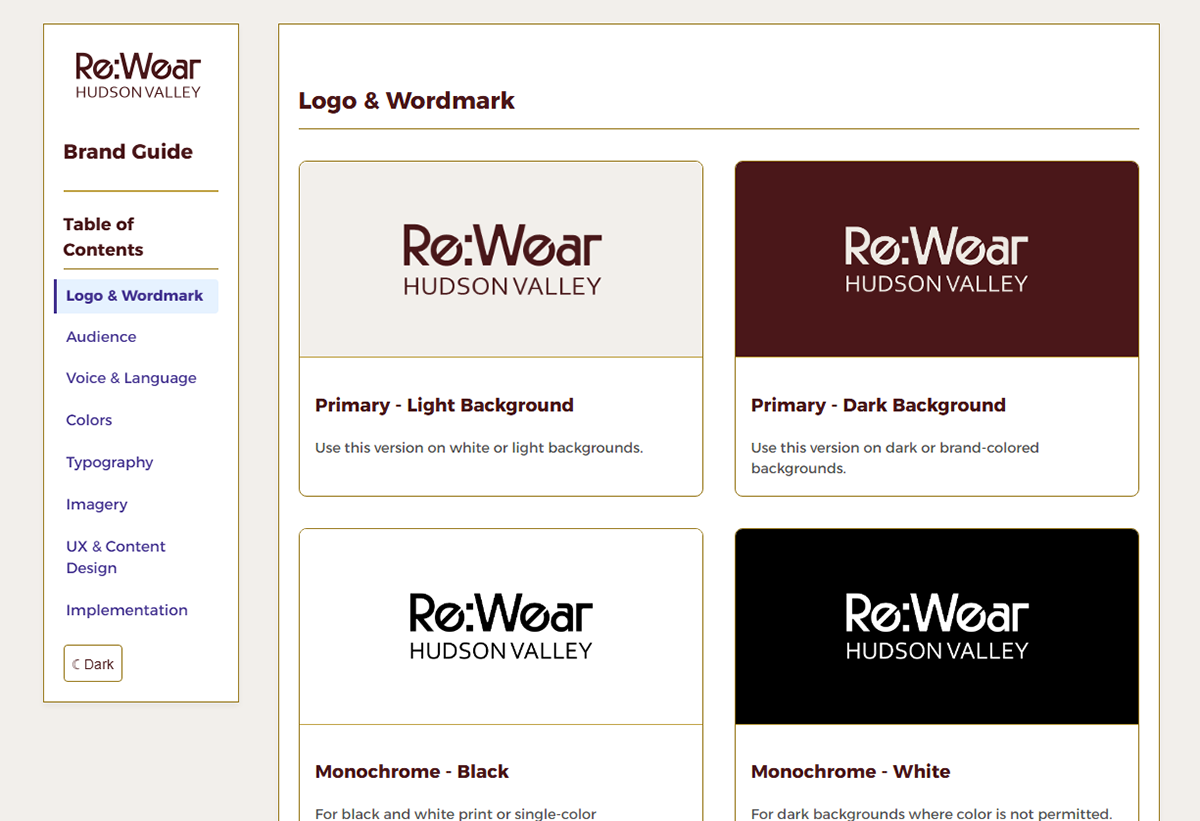
The site also includes references of what logos to use on what types of backgrounds, how to write alt text, and a checklist for reviewing content before publishing.
Lastly, it points out accessibility tools for designers to reach for as they are updating content for the site, making social posts, etc.